English
  Spanish
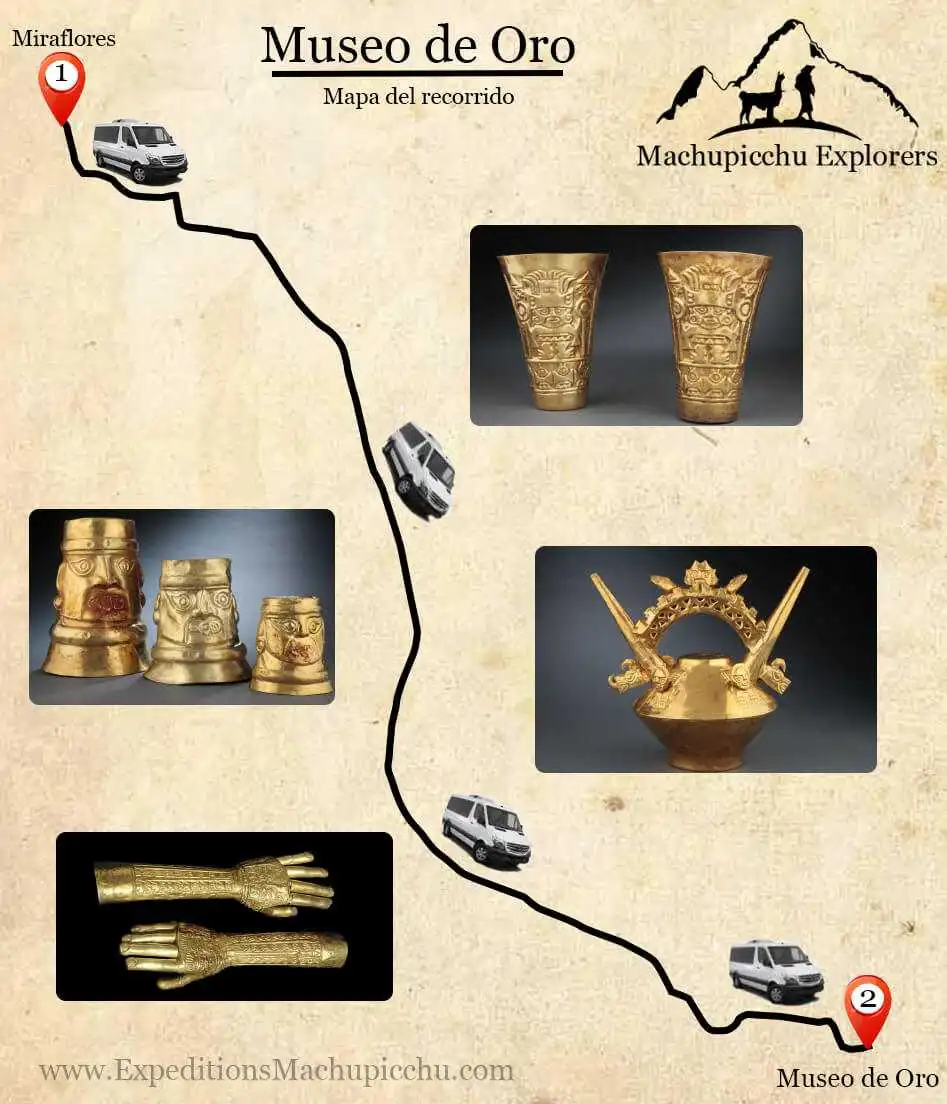
It houses one of the largest collections of pre-Hispanic gold and metalwork, including ceremonial, ornamental, funerary and symbolic pieces made of laminated gold. Its new gallery exhibits the best and most complete collection of gold and silver from pre-Columbian Peru in the world.
The Gold of Peru Museum houses one of the largest collections of pre-Hispanic gold and metalwork, including ceremonial, ornamental, funerary and symbolic pieces made of laminated gold. Its new gallery exhibits the best and most complete collection of gold and silver from pre-Columbian Peru in the world.

Not described
The climate in Lima is hot and humid. It is recommended to wear comfortable and cool clothing, comfortable shoes, sunscreen, sunglasses and money. In fact, on some excursions we will not be able to find ATMs.
Yes, the guide will be present at all times during the tour to provide information about the place visited.
If you experience altitude sickness (headaches, nausea, etc.) it is recommended to rest and relax, drink coca tea and go to a pharmacy. If you have any questions, always contact your guide or tour advisor.
For all our excursions, always carry change, since on tours such as the Rainbow Mountain or Humantay Lagoon we will not find exchange offices or ATMs. The official currency of Peru is the Nuevo Sol (S/.). Our sales advisors and guides will tell you where you can change your dollars, you can also ask at the reception of your hotel where you are staying.
In Peru, the standard voltage is 220v and the standard frequency is 60Hz, except in Arequipa, where the standard is 50Hz. Most hotels offer two-way electricity. It is necessary to bring an adapter for your electrical equipment or you can also consult with the hotel staff.